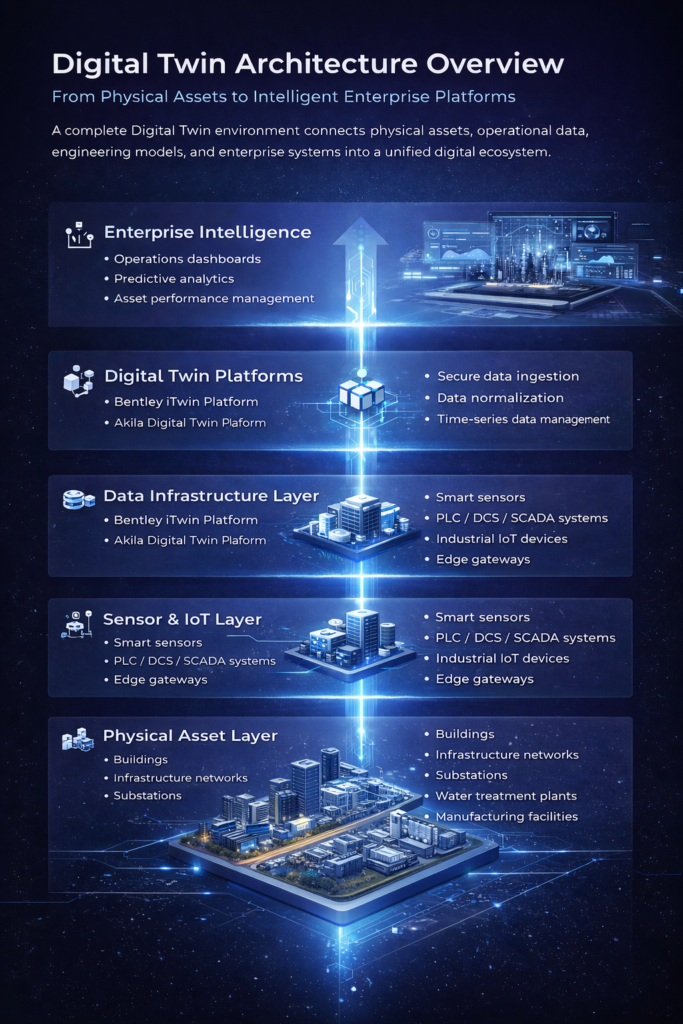
The Digital Twin foundation begins with real-world infrastructure and industrial assets. These physical systems represent the core entities being monitored, analyzed, and optimized within the digital environment.
By establishing a precise digital representation of these assets, organizations gain full visibility into their structure, condition, and operational context.
Examples:
- Buildings
- Infrastructure networks
- Substations
- Water treatment plants
- Manufacturing facilities
The Sensor & IoT layer connects physical assets to the digital world by capturing real-time operational data. Through a network of smart devices and industrial control systems, this layer enables continuous monitoring and data flow.
It forms the critical bridge between physical infrastructure and digital intelligence, ensuring accurate, up-to-date insights into asset performance.
Examples:
- Smart sensors
- PLC / DCS / SCADA systems
- Industrial IoT devices
- Edge gateways
The Data Infrastructure layer ensures that collected data is securely ingested, structured, and validated for accuracy and consistency. It transforms raw data into reliable, standardized formats ready for analysis and integration.
This layer is essential for maintaining data integrity, enabling interoperability, and supporting scalable Digital Twin deployments.
Examples:
- Secure data ingestion
- Data normalization
- Data integrity validation
- Time-series data management
Digital Twin platforms integrate engineering models with real-time operational data to create dynamic, continuously updated digital representations of physical assets.
These platforms enable visualization, simulation, and analysis, allowing stakeholders to better understand system behavior and make informed decisions.
Examples:
- Bentley iTwin Platform
- Akila Digital Twin Platform
At the enterprise level, Digital Twin data is transformed into actionable insights through dashboards, analytics, and decision-support systems.
This layer empowers organizations to optimize performance, improve efficiency, and align infrastructure operations with strategic business objectives.
Examples:
- Operations dashboards
- Predictive analytics
- Asset performance management
- ESG & sustainability monitoring