
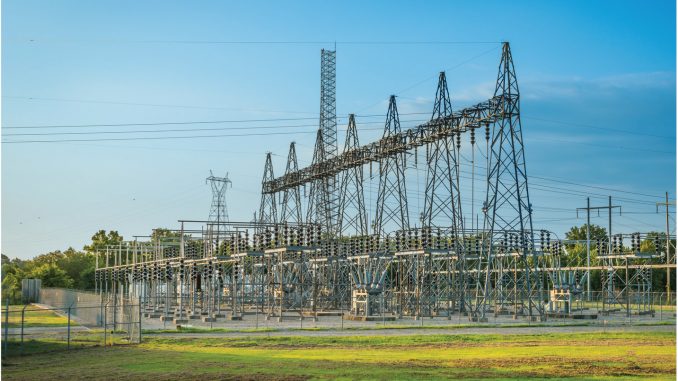
The North Eastern Regional (NER) Grid project was initiated to deliver reliable electricity to seven states in India, serving a population of over 30 million people. The region had experienced slow socio-economic development, creating an urgent need to improve power infrastructure and enable access to reliable energy in remote and underserved areas.
Sterlite Power Transmission Limited was awarded the project, which included the delivery of a 400-kilovolt substation under challenging geographical and environmental conditions. The project also faced a tight construction schedule, requiring efficient coordination across multidisciplinary teams.
Traditional 2D design methodologies previously used by the organization were insufficient for handling the scale and complexity of the project. These methods introduced inefficiencies, increased risks, and limited the team’s ability to coordinate effectively and make informed decisions throughout the project lifecycle.
To overcome these challenges, the project team transitioned from conventional design methods to a fully digital workflow using Bentley’s OpenUtilities Substation and ProjectWise applications.
This approach enabled the creation of a 3D collaborative BIM environment, allowing all stakeholders to work within a connected data ecosystem. The team also utilized SYNCHRO 4D to visualize and monitor construction progress, improving planning and execution.
Through digital workflows, the team performed clash detection, coordinated multidisciplinary designs, and ensured that all project data remained consistent and up to date. This integrated environment enhanced collaboration, reduced inefficiencies, and supported more accurate decision-making throughout the project.
The implementation of a digital BIM and construction modeling workflow significantly improved project efficiency and reduced costs.
By identifying and resolving design clashes early, the team minimized rework and saved approximately INR 2.3 million. The use of real-time 4D construction modeling also improved project planning and execution, resulting in an estimated 15 percent return on investment.
The project successfully demonstrated how digital engineering and collaborative design environments can enhance delivery of large-scale energy infrastructure, particularly in complex and geographically challenging regions.