
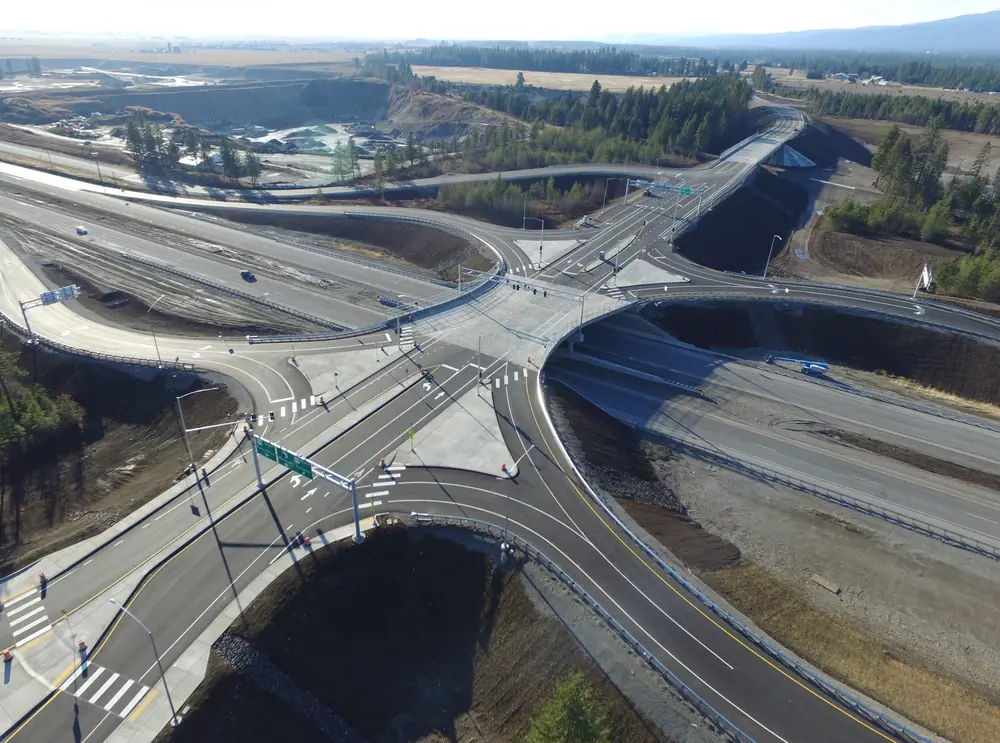
The Idaho Transportation Department (IDT) initiated a USD 55 million infrastructure project as the final segment of a corridor-wide improvement program aimed at eliminating a major bottleneck along US-95. As a critical transportation route, the project required careful alignment planning and coordination to ensure continuity with the broader corridor upgrades.
The project presented significant site constraints and alignment challenges, requiring the design team to carefully evaluate and optimize roadway geometry within existing conditions. David Evans and Associates (DEA) was appointed to lead the consultant management and design effort, which involved coordinating with four subcontractors as well as the IDT bridge design group.
In addition to the engineering complexity, the team faced an aggressive 15-month delivery schedule. This required efficient collaboration, seamless information exchange, and precise coordination across multiple disciplines to ensure that design development, review, and approvals could be completed within the limited timeframe.
To manage the project’s complexity and compressed timeline, DEA implemented a connected data environment using ProjectWise as the central platform for document control, file sharing, and communication. This allowed all stakeholders, including subcontractors and client teams, to work within a single, coordinated system with access to the most current project information.
The team utilized MicroStation and OpenRoads to develop detailed 3D models and visualizations of the roadway and bridge infrastructure. These tools enabled accurate representation of alignment options and site conditions, supporting better design evaluation and coordination between disciplines.
Working within an open and integrated digital environment allowed the team to streamline workflows, reduce inefficiencies in data handling, and improve collaboration across geographically distributed teams. The use of digital modeling also supported clearer communication of design intent to both technical stakeholders and decision-makers throughout the project lifecycle.
The implementation of a connected digital workflow enabled the team to industrialize project delivery and successfully meet the accelerated 15-month schedule. By centralizing project data and improving coordination, the team was able to streamline design processes and reduce delays associated with information exchange.
OpenRoads automated complex roadside modeling processes, allowing the team to efficiently evaluate design alternatives and develop an optimal solution. This resulted in a cost saving of USD 6 million compared to initial expectations.
Additionally, the use of 3D digital modeling and visualization improved stakeholder engagement by clearly communicating design intent. This helped accelerate both client and public acceptance of the project, contributing to smoother project progression and decision-making.